Joanne Doss’s unexplained illness and deterioration
Dr. DeathJoanne Doss’s unexplained illness and deterioration is the prolonged, undiagnosed decline that carried her from an energetic, athletic life into severe physical debilitation and death at forty-three. More than a year of symptoms and extensive medical investigation produced no established cause. That uncertainty did not leave the family with a shared understanding: Richard Doss described a bodily collapse, while others attributed it to psychological withdrawal or emphasized Joanne’s agency in seeking Eldon Mate. Her illness became both a medical mystery and the center of a family’s unresolved grief and conflict.
Onset and Medical Uncertainty
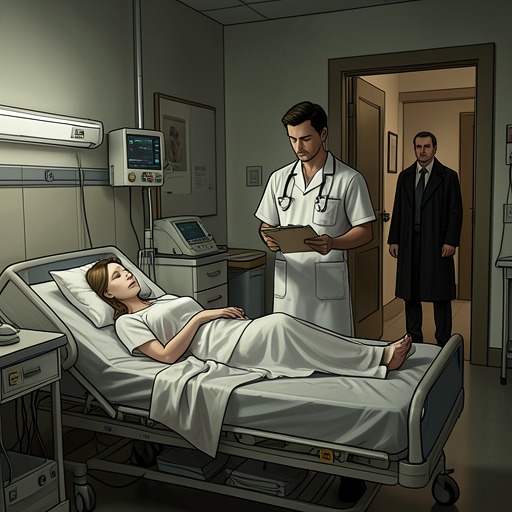
Richard recalled that Joanne had once been five feet two inches tall, weighed 110 pounds, danced, played tennis, and powerwalked. The change began with fatigue, which he initially took for flu or a virus; joint pain, headaches, skin sensitivity, and worsening fatigue followed. He said the progression was gradual, and that by the time he recognized the seriousness of it, she seemed unreachable, as though on another planet. He also remembered her disengaging from the children and from the maternal role she had once embraced.
The family sought answers from a succession of physicians, but none supplied a formal diagnosis. Richard recounted dozens of consultations and tests, including CAT scans, MRIs, serologic and toxicologic testing, and two lumbar punctures; he later learned that one neurologist had been fishing around. Bob Manitow, who was not Joanne’s internist, worked her up as a favor to Richard, then referred her to an immunologist and onward through further consultations. When Alex Delaware later examined the file, he found lab reports from fifteen other doctors as well as the referral bearing Bob Manitow’s name. The record included blood work, urinalysis, X-rays, CAT and PET scans, MRIs, and the lumbar punctures. Its defining result was negative: the documented tests had not established a cause.
Withdrawal and Physical Decline
As the illness progressed, Joanne stopped entertaining and socializing, refused invitations, and gave up business dinners, tennis, golf, and the gym at Cliffside Country Club. Richard said she went to bed earlier and rose later, eventually spending nearly all her time in bed and reporting worse pain. He suspected inactivity might be worsening her aches and stiffness, but said she did not answer him. That was when he began taking her to doctors. The progression from fatigue to isolation and bed confinement was not a single dramatic change, but a sequence Richard said he recognized too late.
Food was the exception to her withdrawal. Richard described Joanne eating cookies, cake, potato chips, and other sweet or greasy foods while spending most of her time in bed. He said she arranged grocery deliveries when he was at work; although he considered restricting her food, he felt that taking away the one thing that seemed to sustain her would be cruel. By the end, according to his account, she weighed 210 pounds—100 pounds more than before and more than twice her original weight, gained in less than a year. He said the change altered his feelings: after twenty-five years together, he found it difficult to recognize the athletic woman he had married in the person before him.
The physical transformation also survives as an image in a washed-out Polaroid: a long view of a king-size bed, a rumpled gold comforter and high mound of beige pillows, with Joanne’s face appearing among them. The photograph presents the illness not as a diagnosis but as an altered body and a person almost swallowed by the bed. In another account, a family friend described the deterioration as grotesque and recalled rashes, pain, inactivity, and a profound loss of self-care. Such descriptions record the visible severity of the decline, but do not resolve its cause.
The Family’s Accounts
Stacy Doss remembered her mother’s passivity as something that preceded the illness. Even before Joanne began falling apart, Stacy said, her mother often let Richard make decisions: she cooked, but he determined the menu. A small menu box containing plans and recipes clipped from magazines suggested to Stacy that Joanne might once have cared about such choices, though Stacy did not remember that investment from her own childhood. Her recollection complicates any simple account in which the illness alone created Joanne’s withdrawal: in Stacy’s view, a muted or passive presence had been part of their family life earlier, even if the collapse made it overwhelming.
Stacy also described a household in which Richard and Eric Doss seemed to dominate conversation with their opinions and quick exchanges. She did not say they consciously excluded her; rather, joining their momentum felt difficult. Later, she acknowledged that the family had not communicated or connected even before Joanne became ill. She could not remember whether she and her mother had once had fun together, and found it difficult to make sense of a mother who seemed hard to grasp. The illness intensified existing distance without providing Stacy with a clear account of what her mother had felt or wanted.
The illness affected the children differently. Stacy said Eric had taken Joanne’s decline much harder than she had and was still struggling with their mother’s death. In a separate conversation, Stacy connected Eric’s overnight absences after he had lost Helen, the family dog, with his habit of thinking late at night in the mountains; she then admitted that he was having a very hard time with their mother. Her account makes the aftermath part of the illness’s history: the physical deterioration ended, but its emotional effects continued in the family.
Competing Explanations and Aftermath
Richard called Joanne a testament to the failure of modern medicine and insisted that the precise reason for what happened would never be known. Yet he also offered a more personal explanation: he believed her central symptom was disengagement, and recalled that she had gradually stopped participating in social life before becoming bedbound. Other family members and acquaintances used psychological language more decisively. One acquaintance described Joanne as psychologically troubled, called the condition depression, and argued that psychiatric treatment and commitment might have prevented her death. That was an opinion, not a diagnosis supported by the inconclusive medical record.
Joanne was one of the undiagnosed people Richard mentioned who had deteriorated for a while, with fatigue, chronic pain, social withdrawal, and a hundred-pound weight gain, before consulting Eldon Mate. Richard and Eric blamed Mate, while Stacy questioned whether that accusation evaded the fact that the decision had been Joanne’s. The disagreement does not settle what caused her illness or establish the circumstances of her death; it shows how medical uncertainty became entangled with questions of consent, blame, and family responsibility. Richard’s refusal to forgive remained consequential in the household, while Alex Delaware recognized that the unresolved grief and conflict also bore on Stacy, whose welfare he had to keep in view.
Significance
The illness is defined by a stark gap between abundant medical activity and absent explanation. Tests, referrals, and specialist consultations accumulated, but no diagnosis could organize the symptoms into a settled account. In that vacuum, the same decline could be narrated as bodily disease, psychological collapse, a decision to withdraw, or evidence of a choice others could not accept. The record supports the reality and severity of Joanne’s suffering; it does not validate any one family member’s explanation for its cause.
That gap also structures the family’s later conflict. Joanne’s physical transformation was plainly visible—in her bedbound life, the reported weight gain, and the photograph—while her internal experience remained inaccessible to her husband and children. Stacy’s memories of earlier distance, Eric’s prolonged grief, and Richard’s anger after her death show that the illness did not simply interrupt a harmonious family life; it sharpened patterns of silence and estrangement already present. Its lasting significance lies in how an unexplained decline leaves both a medical record and a family argument, neither of which can restore the person they describe.